Showing posts with label books. Show all posts

Tuesday, January 4, 2011

Literature Busts

I hate it when my literary icons let me down. I read a lot of books growing up, but somehow I also missed out on a bunch of "classics".

For example, I read Tom Sawyer and Huckleberry Finn (the pre-sanitized version) by Mark Twain and it was genius. Everybody knows what a literary giant Samuel Clemens was and his scathing satires of culture and institutions.  What I didn't know was that he was a raving anti-Catholic.

For fun, I recently listened to a recording of A Connecticut Yankee In King Arthur's Court.  I had two general observations.

One, that the book was actually too long for the subject matter it treated (it got wearisome to listen to the hundreds of permutations of a 18th century New Englander's crusade against Medieval England's ideas - a few would have sufficed.)

The second, was that Clemens never missed an opportunity to impugn the Catholic Church, faith, the concept of dogma, he feared the Church's power, patriarchy and so on. His is a truly relativistic view.

I had started a teacher-factory and a lot of Sunday-schools the first thing; as a result, I now had an admirable system of graded schools in full blast in those places, and also a complete variety of Protestant congregations all in a prosperous and growing condition. Everybody could be any kind of a Christian he wanted to; there was perfect freedom in that matter. But I confined public religious teaching to the churches and the Sunday-schools, permitting nothing of it in my other educational buildings.

I could have given my own sect the preference and made everybody a Presbyterian without any trouble, but that would have been to affront a law of human nature: spiritual wants and instincts are as various in the human family as are physical appetites, complexions, and features, and a man is only at his best, morally, when he is equipped with the religious garment whose color and shape and size most nicely accommodate themselves to the spiritual complexion, angularities, and stature of the individual who wears it;

and, besides, I was afraid of a united Church; it makes a mighty power, the mightiest conceivable, and then when it by and by gets into selfish hands, as it is always bound to do, it means death to human liberty and paralysis to human thought.

Not a new thought perhaps, but newly disappointing.

Tuesday, October 12, 2010

Players At The Game Of People

Players At The Game Of People is a hard biting Science Fiction satire from author John Brunner. It was a novel that I read as a young man that made an impression on me - the idea was so fantastic and out there to be unique (to me). I was probably too young to read it, given the graphic nature of some of the scenes, but the idea stuck with me: what if there were beings who would give you whatever you wanted in exchange for renting out your body and mind for the experiences?

I wondered what I would think of that novel now as a grown man. The idea had been kind of gnawing at the back of my mind for a few months, so I found it used on the Internet and re-read it. My initial thoughts were: wow, I should never had read this as a kid. After the initial shock for my then teen-aged self wore off, my second thought was: too bad the graphic sex scenes got in the way of telling the story. A friend of mine described it as "intellectual pornography".

Finally, after all that I could consider the story. It ain't neat and it ain't pretty. The adult in me quickly realized the Faustian overtone of the whole book. You get whatever you want, but you basically have to sell your soul to get it, and in the end it fails to satisfy. The book is billed as a satire on the European leisure class, but it works just as well for the workaday stiffs. The idea that there are "no consequences" or "livable consequences" is shown to be resoundingly hollow. The main character realizes that his "freedom" is a prettily gilded cage, and his smug superiority is nothing more than lies and self-rationalization of the deal that he made. Calling it meditation, astral projection, aliens, science, good luck charms, communing with nature or whatever is a self-deception.
"So in the old days people would think they'd sold their soul to the powers of darkness, while nowadays they choose some alternative explanation ... The fact that the description changes doesn't alter the event."
In my estimation, that is the money quote. For us as Christians we have to realize that temptations to "success" abound in our society. Whether it is the temptation to be popular, relevant, trendy, powerful, rich, sexually gratified, educated, entertained, the best in our field, or whatever -- the only thing that matters is that we have the mind of Christ and act on it, and submit ourselves to his grace.

We must be in the world, but not of it.

Thursday, September 2, 2010

99 Pounds Of Books

Good Gravy! I just  came from Wynken's Back To School night for middle school.

They made us switch classes just like the kids do, but every 15 minutes. It was quite the whirlwind. After 8 classes I can see that the fact the middle schoolers only get 10 minutes of "recess" is not going to be a problem. The sixth graders are going to get quite the workout going up and down the steps to all their classes.

I've seen the books these kids have and it's enough to give them scoliosis. They've got eight 300-page textbooks and a half dozen workbooks, plus binders and folders for papers. These kids look like something out of (pre-)Teenage Mutant Ninja Turtles -- small kids with giant backpacks that weigh a 99 pounds.

The books are so ridiculously heavy that they even go so far as to give each middle schooler two complete sets of books so one can stay home and one can stay at school to reduce the burden. Good grief! Why not just give them all a Kindle and be done with it? Or an iPad? (Ooooh, iPad!)

All I can say, is that I'm glad I'm not in middle-, high- or any other kind of school anymore. Who wants to be young anyway? Not anybody with a lick of sense.

Thursday, July 15, 2010

Reflections On The MetaGame

Sam Landstrom published his novel, MetaGame, in 2009. I read it because I'm a SciFi geek, and frankly, because it was free.

They say you should write what you know. Sam's bio says he enjoys molecular biology, programming, D&D, water sports, and snowboarding. Sam has written a novel about molecular biology, programming, D&D, and water sports. To be fair to Sam, however, there is nothing in the book about snowboarding.

The story has a fairly predictable story arc of love and redemption. Although it would be more accurate to say "purity of purpose, clarity of mind, and an altruistic intent".

As for redemption, it has a completely different meaning. The book borrows heavily from Christian symbols but imbues them with completely different and secularized meanings: angels are law enforcers, demons are those who break the Rules. Love and responsibility are divorced, actions and morality aren't even speaking to each other. Everyone is caught up in trying to score points in the Game which is the social, economic, and religious engine of this centralized economy.

God doesn't really exist in this world, but there is an OverSoul.
"[T]he OverSoul was indeed inspired by Christianity. Hardly surprising since it was the most widespread religion before The OverSoul."

"[T]he nature of the OverSoul, she is not actually a single being, but a collection of billions of agents, ourselves included.”

"Pillars of Godhead: power over life and death, effective rulership, prayer fulfillment, Omnipotent knowledge, the ability to learn.

“Because change is a constant. Even if, theoretically, a mind could be made perfect for the conditions of today, sooner or later even God would need to change.”

"The OverSoul needs human beings to teach her [using] intentions derived from love.”

“Yes, and there she mimics Christianity again—‘God is Love’—perhaps the core belief of Christianity. And although it may not yet be possible for the OverSoul to directly experience love as humanity thinks of it, she can detect such love in her subjects’ brain signature ... purity of purpose, clarity of mind, and an altruistic intent.”
There are several common fallacies and syncretisms contained in this philosophy as laid out. We will content ourselves with a short list of places and ideas that got borrowed.
The book does bring up a few good questions: what is the nature of God? of reality? of love and sacrifice? of redemption and eternal life? what makes us human? What is doesn't do a good job at is answering those questions.

God is love. That part is correct. Love is "purity of purpose, clarity of mind, and an altruistic intent" -- not so much; try "Love is complete self-donation", see 1 Corinthians 13:4.

God needs to evolve, learn, and to be taught by us? Nope. Try: God is a dynamic unity of persons (Trinity), yet there is no shadow of change in Him. "All good giving and every perfect gift 9 is from above, coming down from the Father of lights, with whom there is no alteration or shadow caused by change." James 1:17. God is the totality of existence of reality, the only necessary being - it is we who are contingent on Him.

And so on.

Conclusion: Interesting book, somewhat predictable, but falls flat in its conclusions. Religion and SciFi/Fantasy don't mix especially well due to the shallowness of the authors.

The only one who has ever pulled this off successfully is Tolkien, and to a lesser extent C.S. Lewis. My advice is read them instead.

Saturday, May 1, 2010

Age Appropriate Virtues: 16 To 18 Years Old

A resource that I refer back to periodically is a book called Character Building: A Guide for Parents and Teachers by David Isaacs. It outlines the general virtues that parents should be developing in their children at various ages.

These are the days that will try parent's souls and put our kids virtues to the test. Time to put the crowning touches on their virtue foundation.

From 16 to 18 years old
  • Prudence
  • Flexibility
  • Understanding
  • Loyalty
  • Audacity
  • Humility
  • Optimism
The first virtues we emphasize for this age level are based on the ability to reason things out intelligently; in other words, it is almost impossible to develop virtues fully without a certain intellectual capacity. ...

When we come to describing how these virtues work, the reader will be able to see why I say this. For example, I speak about 'continually gathering information'; 'thinking out the consequences'; 'protecting a series of values'; 'recognizing various factors influencing situation'; 'recognizing one's own shortcomings'; etc. Therefore, it seems good to emphasize these virtues at the stage when young people are more intellectually developed. ...

In the earlier stage dangers arose out of letting their passions 'do their own thing'; in this later stage the main danger is mistaken ideas. Hence the need for flexibility so that they can learn from different situations without saying goodbye to the standards governing their personal behavior. ...

Parents should realize that already at these ages it is very difficult to require children to do things: nor is it such a good idea, anyway. Rather what they should be doing is really requiring the children to think things out before taking decisions; they should be reminding them of the importance of adopting standards which can form a basis for acting reasonably.

Wednesday, April 28, 2010

Age Appropriate Virtues: 13 To 15 Years Old

A resource that I refer back to periodically is a book called Character Building: A Guide for Parents and Teachers by David Isaacs. It outlines the general virtues that parents should be developing in their children at various ages.

I don't have any kids this old yet, but if anyone would like to share their experiences, feel free to let us know what we're in for.

From 13 to 15 Years Old
  • Modesty
  • Moderation
  • Simplicity
  • Sociability
  • Friendship
  • Respect
  • Patriotism
From age of thirteen to fifteen, it seems desirable, in view of the young person's greater awareness of his own intimacy, to insist especially on virtues linked with temperance, in the first place. The purpose behind this is to help him keep goodness in sight and not let his passions get out of control.

If we emphasized fortitude earlier on, we now come to harnessing that virtue to protect what is everyone's precious possession - his intimacy. By this I mean soul, sentiments, thoughts - not just physical intimacy. The virtues of modesty and moderation involve recognizing the value of what one possesses, so as then to make better use of it - in accordance with standards which are right and true.

What kinds of motivation can we offer children at this stage? I thing we have to give them reasons. We ourselves generally learned to behave by imitating our educators, but nowadays our children are not inclined to imitate us. They ask for reasons. ...[I]n connection with giving information to young people, I would dare to offer a recipe: information should be given by the three C's - clearly, concisely, and then changing the subject.

Apart from those virtues connected with temperance, it is good also to emphasize others which have to do with the person's privacy and with is relationships with others. That is why I stress sociability, friendship, respect, and patriotism. These four virtues presuppose being interested in one's own privacy and in the good of other people in a practical way. And it is here that the parents can make their biggest contribution. I refer to the guidance they give their children about how to channel their concern for others into practical acts of service. We should realize that the adolescent by his very nature is idealistic and also needs to have new experiences. If we parents fail to help him, then it is likely that outside influences will misguide him.

Simplicity, because an adolescent needs it if he is to act in accordance with his ideals and to be accepted for what he is.

Sunday, April 25, 2010

The Virtues: Annoying Things To Persevere With

A resource that I refer back to periodically is a book called Character Building: A Guide for Parents and Teachers by David Isaacs. It outlines the general virtues that parents should be developing in their children at various ages.


It seems to me that the transition for parents is just as difficult as it is for children. Teaching and motivating children and this age takes more patience, more explanation, and a different approach. Saying "because I asked you to" doesn't cut it anymore. Children become more aware and are looking to their parents' example as much as their words. Although they are paying more attention to the world around them, their awareness doesn't penetrate very deeply beyond themselves. This is the perfect time for the "object lesson" -- but you still have to spell it out.

From 8 to 12 years old
  • Fortitude
  • Perseverance
  • Industriousness
  • Patience
  • Responsibility
  • Justice
  • Generosity
As we will see, we now come to four virtues connected with the cardinal virtue of fortitude; two connected with justice and one with the theological virtue of charity.

Children at these ages undergo a series of biological changes with the arrival of puberty, and it is very desirable for them to develop their will, so as to strengthen their character. They now begin to take more personal decisions but they need criteria in order to know whether their efforts are going in the right direction. We complement the virtues connected with fortitude by including some virtues directly concerned with other people - responsibility, justice and generosity.

Anyway, it is logical for children of this age to focus more on what they are doing, on the action itself, than on the person at the receiving end of the action. They are not yet very aware of their own intimacy. This is a stage when we should try to get children to keep at things not out of obedience, but rather for the satisfaction of managing to overcome some obstacle. This is the age for challenging targets (but reasonable targets). Just as the small child is very aware of the rules of the game when playing with his companions and in general in relationships with others, it is surely good to stimulate children to develop virtues out of a sense of duty towards their companions, for example, but without forgetting to enthuse them with a worthwhile ideal. In this way they will get the satisfaction that comes from making an effort to overcome themselves.

All these virtues call for the use of the will. When we come to the descriptions of the virtues we will see that they have to do with 'putting up with annoying things', with 'continually making an effort to give to others', to 'attain what they set out to achieve', to 'resist evil influences', etc. To do all these tings they need to set their sights high and not to be content with mean ideals.

This is a crucial time for 'aiming high'. By this I mean raising children's sights up towards God and getting these human virtues to build up their developing faith.
Next time we will touch upon:

From 13 to 15 years old
  • Modesty
  • Moderation
  • Simplicity
  • Sociability
  • Friendship
  • Respect
  • Patriotism

Wednesday, April 21, 2010

The Virtues: Drop Dead And Other Age Appropriate Things

We don't know ahead of time when we will die, when the Lord will call us to account. Mrs. Nod has actually forbidden me from dying on pain of death. (I tried to reason with her about that one, but no luck.)

A 50-year old father at our Catholic school up and died suddenly this week. He leaves behind a grieving widow and at least two boys. Wynken and the other 5th - 8th graders attended the funeral Mass at the parish today. Wynken said that he was a bit sad about it and recalled two other funerals that he has attended: one was for a (former) classmate earlier this year (very sad), the other was for his great-grandmother when he was 5 years old. I told him it was OK to be sad, but that we had the hope of the Resurrection.

I remember when his great-grandmother (on his mother's side) died. We attended with Mrs. Nod's family, and we had to travel to West Virginia where Grandma was born and her husband was buried. My nephew who is 8 months younger than Wynken was there and during the wake the boys got into a heated argument.

It seems that his parents had told him that Grandma had "fallen asleep" and wouldn't wake up again, whereas I had gently but firmly told Wynken that Grandma had died, and answered any questions he had at the time. (I honestly don't remember what they were.)

I've always made it a policy to answer any direct questions my kids ask as simply and honestly as I can at an age appropriate level. I might not volunteer every bit of information I have, depending on their maturity, but I've never lied to my kids.

That, of course, is the tricky part: age-appropriate information. How do you determine what to tell your kids and when? Obviously this is going to vary from kid to kid and family to family, but there should be some general guidelines that you can follow. Also this week I've had to field questions about why people get divorced, and I've tap-danced around questions related to how babies come into the world. (On one occasion in mixed kid company I replied, "Oh, the usual way.")

A resource that I refer back to periodically is a book called Character Building: A Guide for Parents and Teachers by David Isaacs. It outlines the general virtues that parents should be developing in their children at various ages.

Up to 7 years old
  • Obedience
  • Sincerity
  • Order
"Until they are seven, children scarcely have the use of reason and therefore the best they can do is obey their educators and try to fulfill this duty with affection ... In any event, at all ages the merit lies in obeying whoever is in charge - provided that one is not asked to do something wrong. Obedience is produced by parents making reasonable demands. They will have to be very demanding - but only on a very limited number of points, giving very clear, precise instructions.

"Children could obey because they are afraid or because there is no way out. These are very lowgrade motives. They should be encouraged to obey out of love, to help their parents: this is the first step towards developing the virtue of generosity.

"At the same time we should develop in them the virtue of sincerity, because this requirement to do certain things (to obey) gradually has to be turned into a requirement to think ( a form of guidance), and this guidance by parents only makes sense if it is based on the child's real situation. Sincerity has also a lot to do with modesty and we will come back to this virtue at the teenage stage.

"We also include the virtue of order - for a number of reasons: 1) if it is not developed early on, it is much more difficult to develop it later; 2) it is a virtue necessary for people to get on well together; 3) it is good for mothers' peace of mind: and that, quite seriously, is something important.

Next time we'll cover:

From 8 to 12 years old

  • Fortitude
  • Perseverance
  • Industriousness
  • Patience
  • Responsibility
  • Justice
  • Generosity

Friday, March 26, 2010

A Scout Is Prepared

They say that a scout is prepared. Well, the core of being prepared is knowing what you are supposed to do or have. So we need some instruction and some reference materials.
I got these great titles on order. The cool thing about Scouting is that it actually teaches you practical things that you need to know, such as knots, first aid, wilderness skills, plumbing, citizenship, woodworking, leadership skills, budgeting, and so on. These are life skills, not just Boy Scout skills.Just imagine if everyone was required to take and pass a class on budgets and money management. Maybe we could avoid the rampant fiscal irresponsibility we see in our society today. Imagine if everyone were taught to be self-sufficient and take responsibility, maybe our culture of dependency would melt away.
Hmm. Fiscal and personal responsibility, where have I heard that before?

Wednesday, February 3, 2010

Gargoyle Code Arrives

The U.S. mail still runs fairly well, despite its drawbacks. The latest delight in my mailbox were half a dozen copies of The Gargoyle Code by Fr. Dwight Longenecker.

And they are autographed: To my number one fan and his awesome family ... ok, maybe not, but they are signed, which I find extremely cool. You rock, Fr. L.!

The book is written as a series of letters from a senior Tempter to his protege in Screwtape fashion and is specifically set up for Lent. The index tells you which letter to read from Shrove Tuesday to Easter Sunday.

I'm looking forward to both reading it and writing a review in this space. It's not too late for you to get in on the action either, get yours today!

Help Push Gargoyle Code

My Screwtape Letters-type book, The Gargoyle Code began its life here on this blog. As readers will know it is structured as a Lent book. The letters begin on Shrove Tuesday and take you through to Easter Day.

I am therefore having a big push to get as many copies out there as possible. Here's how you can help:

  1. If you have a blog, a parish paper, a diocesan paper or any print outlet, and would like a review copy please email me and we will send you one. I just ask that you really do have such an outlet for a review and that you publish the review before the beginning of Lent.

Sunday, January 31, 2010

Art of Manliness: the Book

Not enough people talking about real manliness these days -- as opposed to machismo or sentimentality. Sites like Art of Manliness are a welcome addition on the scene. They even have a book you can get autographed.

Art of Manliness: Classic Skills and Manners for the Modern Man Is Available Once Again!

by Brett & Kate McKay on January 29, 2010 ·

As explained last month, our publisher was not prepared for the popularity of the our first book, The Art of Manliness: Classic Skills and Manners for the Modern Man. Two weeks before Christmas the first print run of books sold out.

It takes awhile for a publisher to print another run, but the second print run of the book is now out. This means the book is once again in stock and available on sites like Amazon.com. It is also means that you can once again buy autographed books directly through us.

We’re sorry for this delay-it’s been quite frustrating for us. If there was anything we could have done to expedite the reprinting process, we defintely would have, but it was unfortunately out of our hands. Thank you very much for supporting the book!

Sunday, January 10, 2010

The Quiet Light

THE QUIET LIGHT, by Louis De Wohl, is quite possibly my favorite book.

I purchased it on a whim because I had $5 left over on a gift certificate to a Catholic book store. I even bought it again after I thought I had lost it several years later.

It has everything a guy could ask for: knights errant, Crusades, the towering intellect of Thomas Aquinas, romantic love, self sacrifice, philosophy, history, drama, and Truth.

Louis De Wohl books are as addictive as crack -- and they're about Saints!

Only another writer can describe it well (emphases mine):
De Wohl's narrative, character development, and spellbinding prose made THE QUIET LIGHT much more than the fictionalized biography of Thomas Aquinas I had expected. It was nothing less than a staggering example of compelling storytelling which, by the sheer enormity of talent displayed, should have intimidated any aspiring/wanna-be writer.


Be advised: you will come away from THE QUIET LIGHT with more than the pleasure of having read a masterly crafted novel of the Middle Ages. Rather, you will find yourself informed and educated on everything from the Crusades to the philosopical infighting then being waged throughout both Europe and the Saracen worlds to the intrigues of the Italian nobility and their Germanic, decidedly unholy Holy Roman Emperor. You will marvel at how De Wohl weaves all this into a story that is filled with richly drawn characters, both historical and fictional.

By the end of THE QUIET LIGHT, you may even discover you have learned something about how to tell a story in a way that makes the reader mourn that he or she has reached the end of the book.

THE QUIET LIGHT is that good. So is Louis De Wohl.

--Earl Merkel
(Author of FLU SEASON and LIKE DISTANT CITIES BURNING)

Wednesday, December 30, 2009

In The Beginning

In the beginning was the Word ... and the world was made to make room for it -- or so it would seem.

Read on for a fascinating view into Pope Benedict's understanding of covenant theology. Scott Hahn also has a new book out on the subject: Covenant & Communion: The Biblical Theology of Benedict XVI. I haven't read it yet, but it comes highly rated.

The following paragraph taken from Pope Benedict XVI's introductory address on Monday, 6 October 2008, Address of His Holiness Benedict XVI at the Opening of the 12th Ordinary General Assembly of the Synod of Bishops, sets his understanding of covenant in perspective. [Emphasis mine]

The following verse says: "Omnia serviunt tibi". All things come from the Word, they are products of the Word. "In the beginning was the Word". In the beginning the heavens spoke. And thus reality was born of the Word, it is "creatura Verbi". All is created from the Word and all is called to serve the Word. This means that all of creation, in the end, is conceived of to create the place of encounter between God and his creature, a place where the history of love between God and his creature can develop. "Omnia serviunt tibi".

The history of salvation is not a small event, on a poor planet, in the immensity of the universe. It is not a minimal thing which happens by chance on a lost planet. It is the motive for everything, the motive for creation. Everything is created so that this story can exist, the encounter between God and his creature.

In this sense, salvation history, the Covenant, precedes creation. During the Hellenistic period, Judaism developed the idea that the Torah would have preceded the creation of the material world. This material world seems to have been created solely to make room for the Torah, for this Word of God that creates the answer and becomes the history of love.

The mystery of Christ already is mysteriously revealed here. This is what we are told in the Letter to the Ephesians and to the Colossians: Christ is the protòtypos, the first-born of creation, the idea for which the universe was conceived. He welcomes all. We enter in the movement of the universe by uniting with Christ.

One can say that, while material creation is the condition for the history of salvation, the history of the Covenant is the true cause of the cosmos. We reach the roots of being by reaching the mystery of Christ, his living word that is the aim of all creation.

Mind blowing!

Thursday, September 24, 2009

Hey There, Flabby

You're flabby, complacent, and despite a regular prayer life and involvement in the parish ministry you still haven't attained to the transforming union with Christ; although you're basically a good Catholic, going to Mass and avoiding serious sin, you're more or less just getting by.

If you can identify to any degree with these statements, I'm talking to you. If you emphatically believe that this does not apply to you, I'm most definitely talking to you. I know that I'm not excepted from this, and very few of us are saints or near-saints; ergo, you could use a few spiritual push ups.

This book, Temptation & Prayer, will kick your butt. It will challenge you like books many times its length will not. It's short. Really short. Chapters are about one or two pages each. It's also easy to understand. It's -- how shall we say it? -- practical, incisive, cuts to the chase.

[Joseph I. Cisetti] Grounding himself in the thought of Ignatius of Loyola and John of the Cross, Galilea offers brief, even pithy chapters, seldom more than two pages, that are sharp, practical and insightful.

Acknowledging that temptation is part of any human as well as Christian life, Galilea observes that those with a mature spirituality generally resist temptation to intentional evil but instead face the temptations of mediocrity, tepidity and stagnation.

Often these evils can appear as good and hence the need for greater discernment. After initially reflecting on discernment as a type of salve applied to the eyes so that we might see, Galilea divides the book up into two sections regarding ministry and prayer. Each concise chapter concerns itself with a "demon" of ministry or of prayer.

Galilea first describes sixteen demons of prayer that include activism, sectarianism, entrenchment, pastoral envy and losing a sense of humor. In his analysis Galilea shares some succinct but sharp wisdom.

The second section lists twenty-one demons of prayer ranging from discouragement and neglecting one's lifestyle to putting quantity above quality and not putting sensations and feelings in their proper place.
I have this book and I periodically refer back to it to shake myself out of complacency. Galilea doesn't leave you much wiggle room. Everyone can find something to benefit from in this little book.

Wednesday, September 2, 2009

Chesterton: Human Vs. Christian Charity

I read The Chief Mourner of Marne, by G.K. Chesterton. I was struck by this quote at the end of the story.
"There is a limit to human charity," said Lady Outram, trembling all over.

"There is," said Father Brown dryly; "and that is the real difference between human charity and Christian charity.

You must forgive me if I was not altogether crushed by your contempt for my uncharitableness today; or by the lectures you read me about pardon for every sinner.

For it seems to me that you only pardon the sins that you don't really think sinful. You only forgive criminals when they commit what you don't regard as crimes, but rather as conventions.

So you tolerate a conventional duel, just as you tolerate a conventional divorce. You forgive because there isn't anything to be forgiven."

Tuesday, September 1, 2009

The Gargoyle Code

Fr. Longenecker is at it again with a new book called The Gargoyle Code which is written in the tradition of The Screwtape Letters.

Fr. L. discusses his new book in a podcast here. Check out Fr. L. as he reads a letter from the book! Very cool! Fr. L. says this book is just right for Lent (thinking ahead).


Here's a podcast in which I speak about Screwtape Letters and my new book Gargoyle Code. Tell your friends to tune in please. If you have a blog, I'd love you to link to the podcast.


The book is available through St Benedict Press, and will soon be available for purchase through my website. If you would like a signed copy just send me an email: dlongenecker@charter.net and let me know how many copies you would like, and the address to which it should be sent. Then go to the 'Donate' button in the right sidebar of the blog and donate the amount we agree. (one book is $15.00 which includes p+p, but more than one costs less)

Friday, August 28, 2009

Thrill Of Recognition

I had the opportunity to visit the Catholic Information Center in Washington, D.C. at lunchtime. I've never been there before, so I wasn't sure what to expect. They have a pretty decent bookshop, opportunities to hear speakers and go to confession, and a full blown chapel.


I stepped inside the chapel to check it out, and there was a tabernacle! I felt a thrill of recognition sweep through me, and I just spent a minute with our Lord in wordless prayer. Totally made my day!

While I was in the shop, I heard Mass starting; the sign outside the door also proclaimed Eucharistic adoration from 1-4 pm. Awesome!

Friday, May 29, 2009

Poll On The Best Detective

Let's try something new: a simple poll. See it in the upper left corner of the blog sidebar?

A simple question, four possible answers. Who's the best detective? Sherlock Holmes, Hercule Poirot, Miss Marple, or Father Brown?

Go on, vote!

Wednesday, May 27, 2009

Riddle Me This

UPDATE: Take the poll in the upper left sidebar. Vote for your favorite detective!

In a bake-off of great fictional detectives, who would win? I may have to watch them all to find out. Even If I can't draw any final conclusions, it'll still be time well spent. Who would you vote for:

Hercule Poirot


Sherlock Holmes


or Miss Marple?

Saturday, May 23, 2009

The Cool Pool

Just about every kid out there loves the pool. Today, our pool opened and the day was hot. Perfect combination. After getting a bunch of chores and errands done, Mrs. Nod headed off to the pool with Wynken, Blynken, and Nod-girl while I stayed home with the toddlers and their naps.

So why didn't I go? Other than logistical difficulties with two toddlers who are hell-bent for leather to drown themselves, and other than the fact that they love it more than I do*, I was perfectly content not to go, because I know something that the Nodlings don't: the water is freakin' cold still.

There haven't been enough hot days yet for that giant mass of cold water to warm up appreciably. Wait a month, then it'll be great. Plus, being the very first day, the chlorine levels have to be intolerably high -- I'll wait to see their puffy little red eyes in church tomorrow.

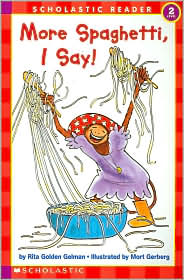
* The phrase "love it more than I do" reminds me of one of my favorite childhood books called More Spaghetti, I say! by Rita Golden Gelman in which Minnie can't stop eating spaghetti.
"I love it. I love it. I love it. I do."
More than me?

"More than you."

LinkWithin

Related Posts with Thumbnails