Showing posts with label catholic. Show all posts

Friday, January 2, 2015

Happy New Beer

Or is that year? I vote for both: new year and new beer.

Somewhere between my birthday and Christmas the incredible duo, Mrs. Nod and Grandma Nod, got together and gifted my inner geek with some nifty Beer Gear.

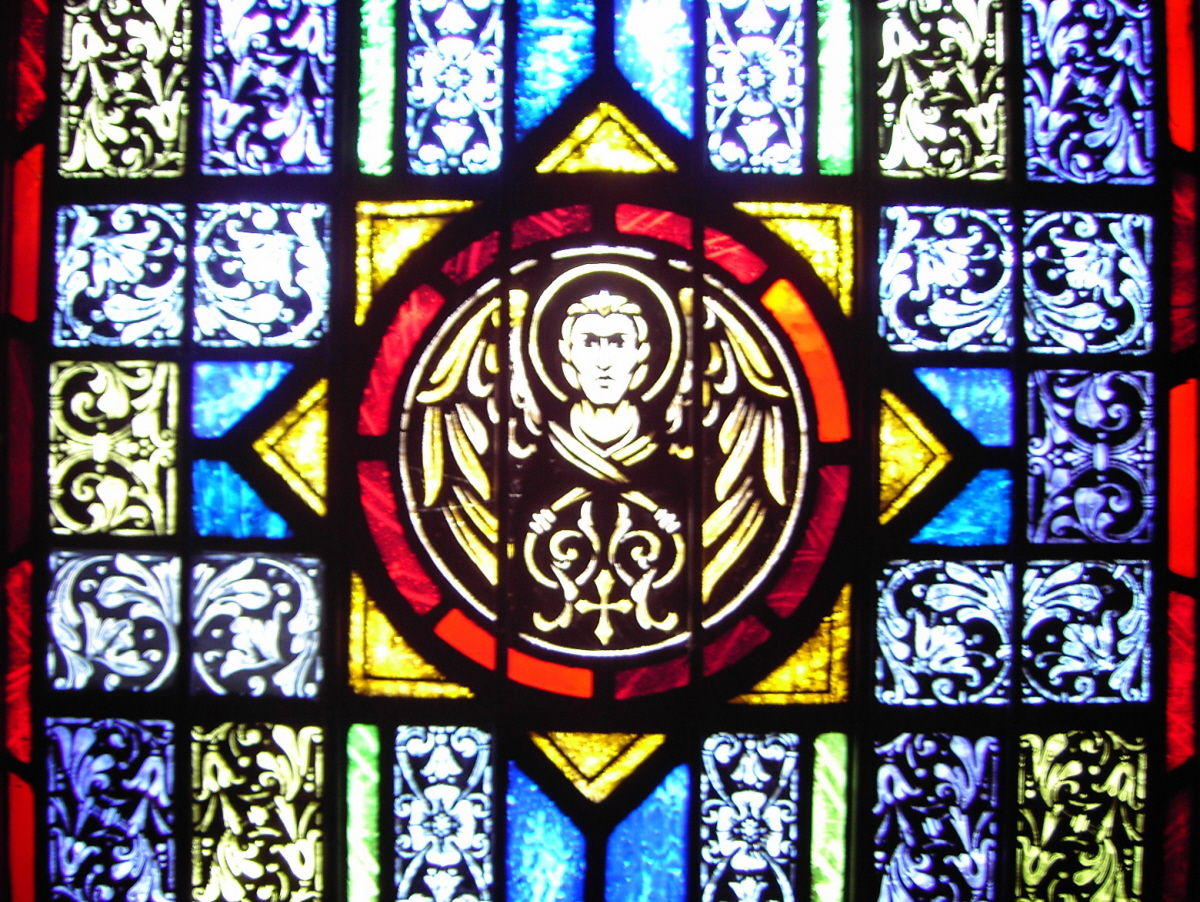
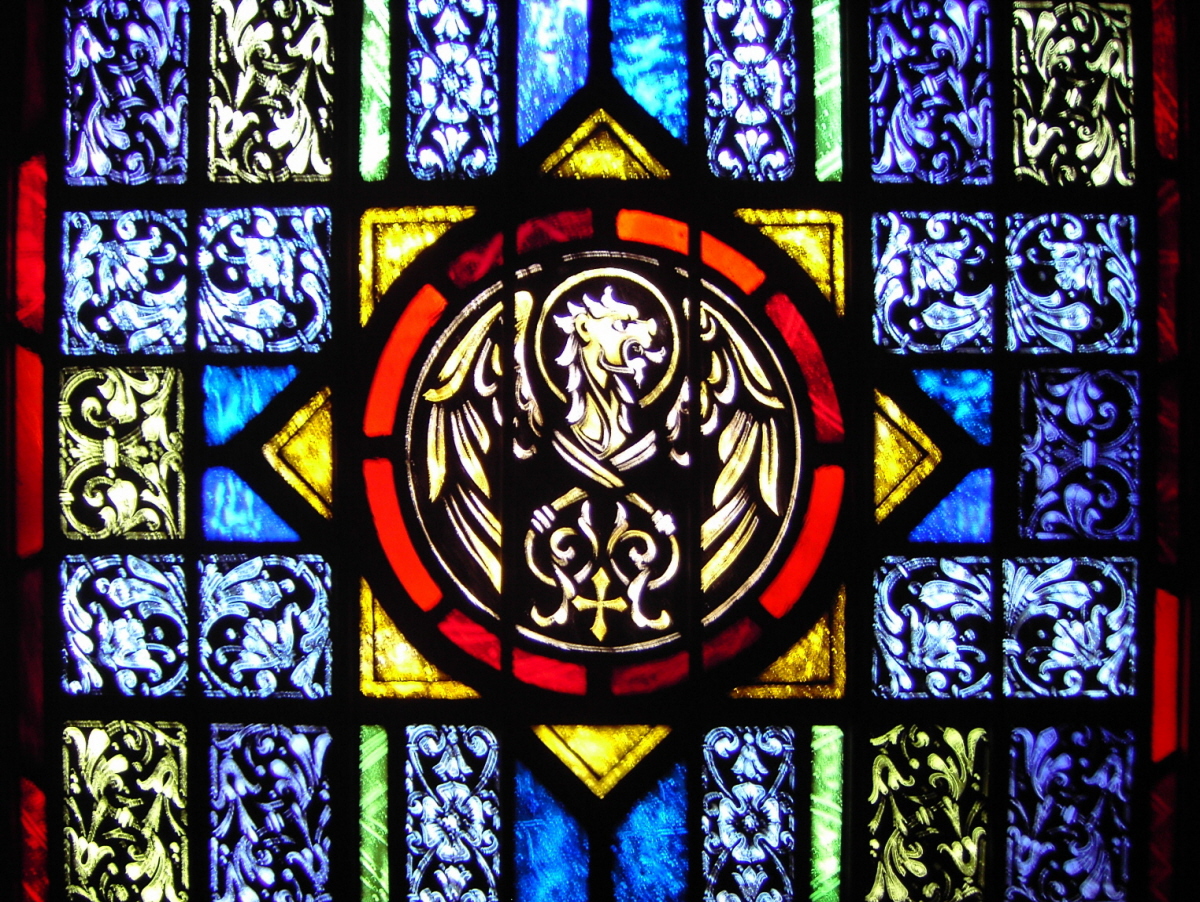
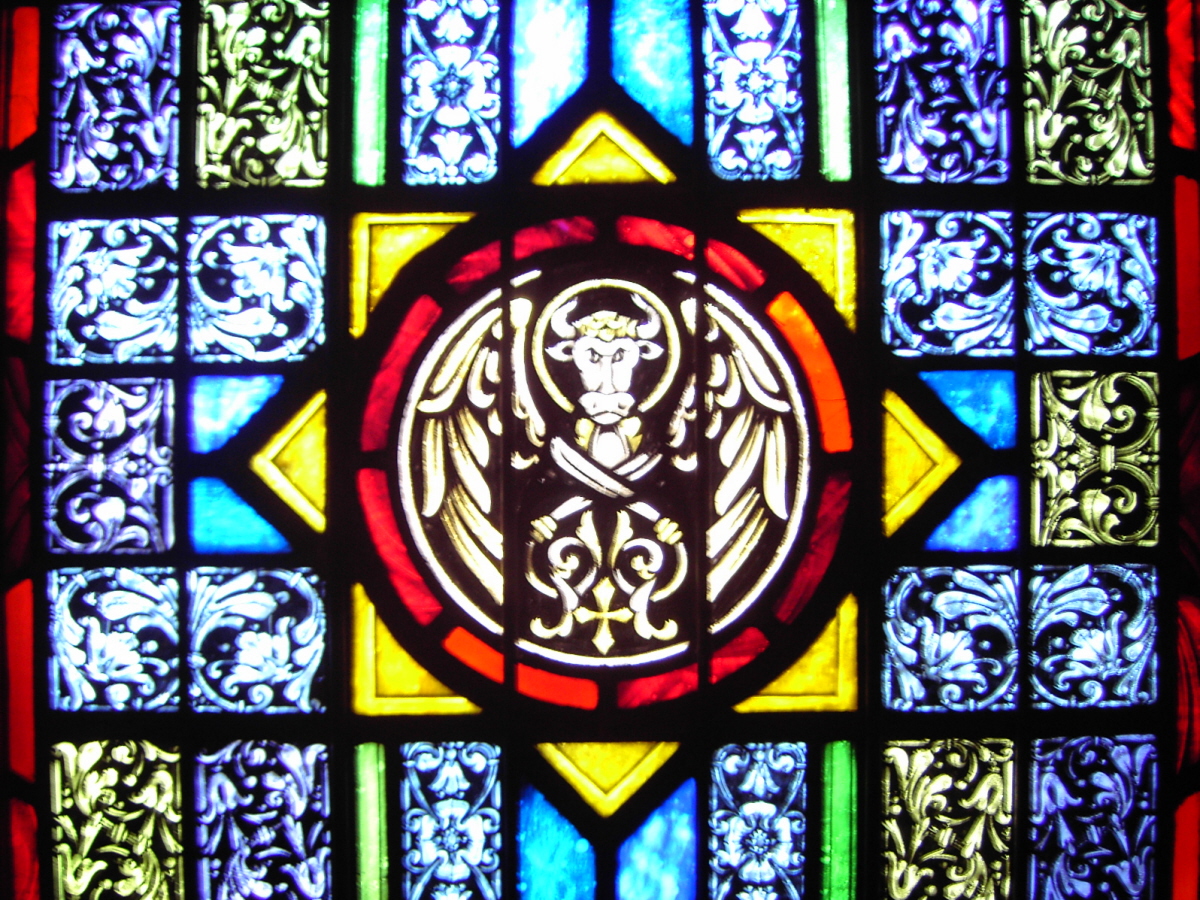
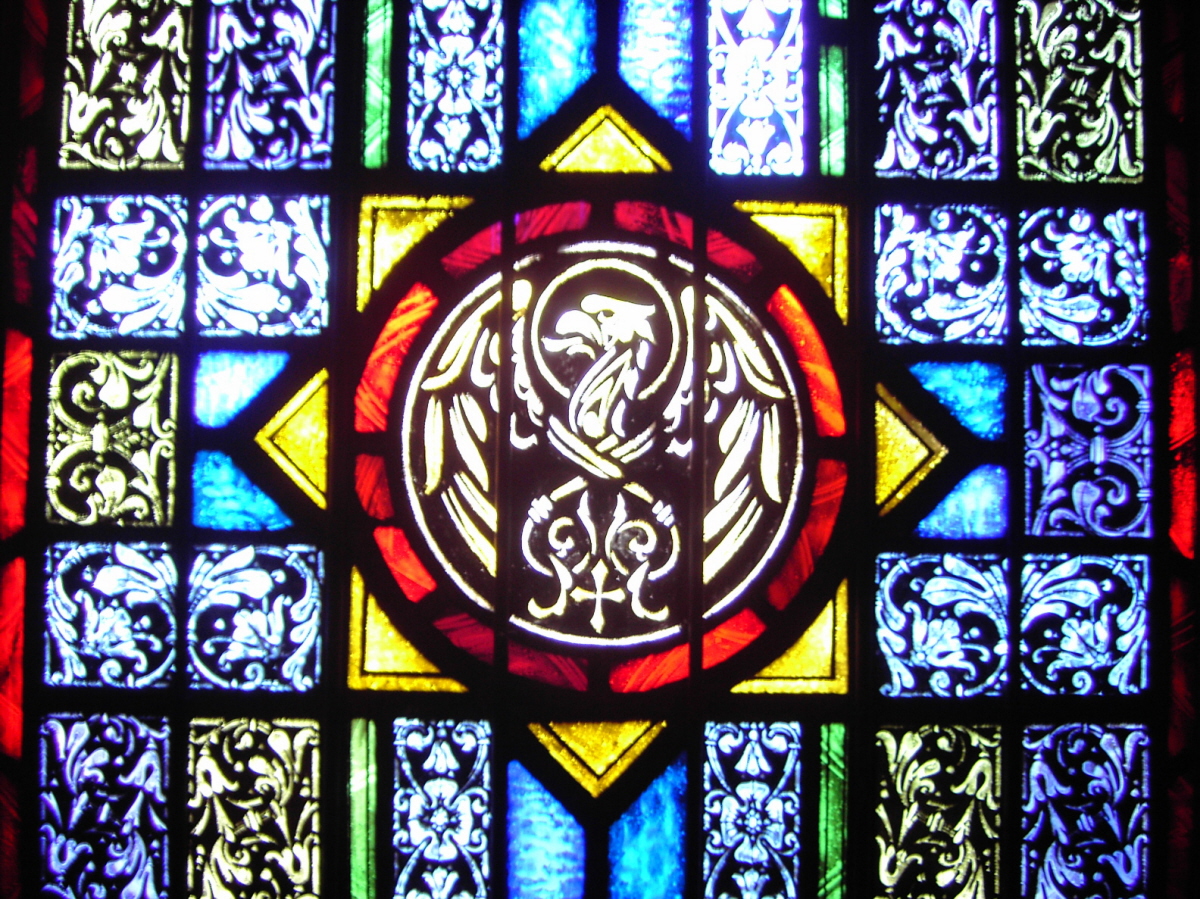
I was searching for something other than the plain beer tap handles my kegerator came with, when I chanced upon these magnificent stained glass windows with the symbols of the Four Evangelists from St. Ignatius Parish, San Francisco: Matthew (Winged Man), Mark (Winged Lion), Luke (Winged Ox), and John (Eagle).  h/t CatholicResources.org


Right then, I knew these would combine two great things I love: beer and Catholicism. Plus, it's a winged lion and and eagle -- how cool is that!?

Through the talented hands of Jerry's Wood Works, these became two very swanky hand-made beer taps in African Mahogany and Tiger Maple with painstaking pyrography, chrome tips, and Celtic knots on the handles.  Ain't they grand?


Also in my stocking was a Blichmann Floor Burner so I can make all-grain beer. This thing puts out 72,000 BTU/hr with clean low-flame combustion (won't blacken the bottom of your kettle) which can boil 5 gallons of water in about 24 minutes -- that's some serious heat!
So we took our new burner for a spin and made an all-grain IPA beer called Kama Citra. Northern Brewer describes it as:
"Pouring a tantalizing golden-amber, the seductive hop aroma gently gives way to a sturdy, yet flexible malt backbone with a delicate touch of silky caramel that supports the highly suggestive combination of juicy tropical and citrus hop flavor that follows, leading to a satisfying finish."

It's currently happily fermenting away in my basement giving off the most delicious tropical fruit aromas. Six more weeks to liquid bliss!

So let's start off 2015 by raising a glass: here's to you!

Sunday, April 20, 2014

Christos anesti! Alithos anesti!

Christos anesti! Alithos anesti!

Christ is Risen! He is Risen Indeed!
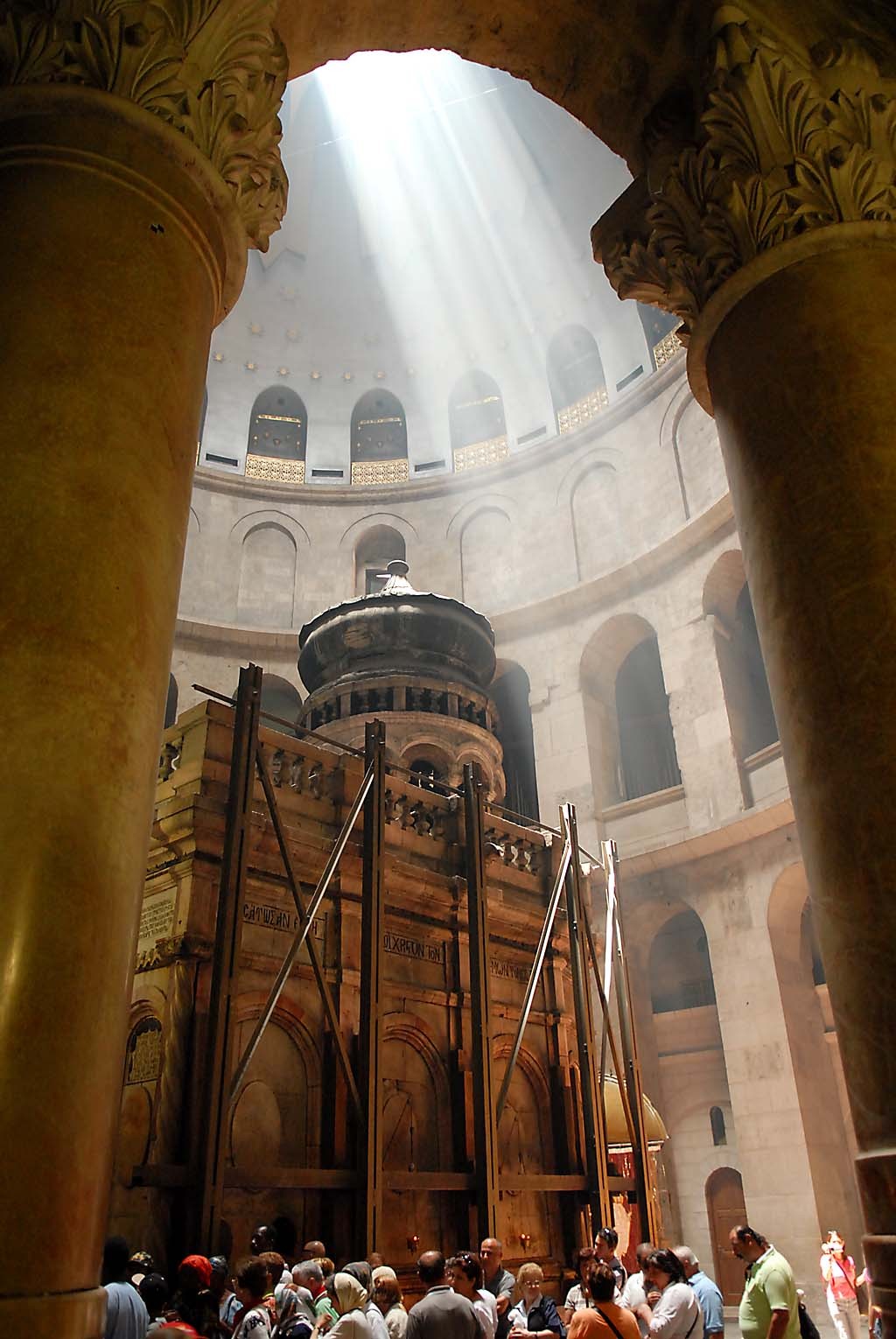
(Traditional Greek Easter greeting) Picture of the Holy Sepulchre.

Happy Easter, all. Read more Paschal greetings worldwide.

Friday, December 6, 2013

Catholic Worst Case Scenario Survival Rule #2

Let's say you're a Catholic who has just arrived in the Land of Scorpions. Your great Uncle Rubin has recently died and left you a claim to a silver mine in his will.  After praying for the repose of his soul, you come down to Durango, Mexico to inspect your inheritance.

After confirming that it is an active silver mine you go into town to celebrate your good prospects and to raise a glass (or two!) in the cantina to your great Uncle Rubin. The next morning you wake fuzzy headed and with strange, painful welts on your arms. You decide that Alacrán de Durango doesn't mean Dance of the Scorpions and wasn't meant to be done with live scorpions in any case.

Overcome with remorse and more than a little worried about the welts on your arms you rush to the local Catholic church and line up for Confession. You jump into the box when you suddenly realize: not only does the priest not speak English, you don't speak any Spanish!

You exit the confessional looking woeful and confused. A friendly old Duranguense man who is next in line greets you in English and offers to translate your confession to the priest.

What's a body to do? Is it OK for this man to translate your confession? Does the seal of the confessional apply to your translator as well even though he isn't a priest?

Things are looking pretty dicey indeed. But this Catholic worst case scenario survival tip is just what you need:
CIC, Canon 983.2 A penitent who does not speak the same language as the priest confessor may bring a translator into the confessional. In such a case, however, the translator is also bound by the seal of confession
The same canon says that anyone who accidentally or purposely overhears another person's confession is bound by the seal to keep it a secret, even from the penitent. 

Anyone who overhears another person's confession must keep this a secret under the seal of confession, under pain of serious sin. The penalties for revealing another person's confessional material must be just, according to the seriousness of the offense. The penalties may include excommunication, though this is not automatic as in the case of a priest who breaks the seal.

So go ahead and 'fess up, partner. You get the grace of the sacrament, and your translator pal gets to keep your secret. Remember this Catholic Worst Case Scenario Survival Tip #2:

If you're a gringo without lingo and in distress,
Your friend on the end can help you confess.
Subscribe to Wynken, Blynken, and Nod via RSS here!  See more Catholic Worst Case Scenario Survival tips here.

Wednesday, November 20, 2013

Catholic Worst Case Scenario Survival Rule #1

A buddy of mine recently posed this scenario:

You are a Catholic hiking in a remote section of the Himalayan region of south Central Asia or perhaps Russia when you unexpectedly startle a local Yak herd. In the ensuing stampede you are gored by a Yak bull and seriously injured. 

You are afraid you may die and you are aware of a serious sin on your conscience. The herdsman applies basic first aid and carries you down the hill to the nearest Orthodox church. The priest rushes to your side and offers to hear your confession. 

As a Catholic, can this Orthodox priest shrive you?

Wow. That's actually a pretty bad Catholic worst case scenario. What's a body to do? The good news is that Orthodox priests are validly ordained and have valid sacraments. Ergo, an Orthodox priest can forgive sins. The bad news is that the Orthodox church is not presently in communion with the Pope as the Supreme Pontiff of the Universal Church, so their sacraments are not considered licit (legal) for Catholics.
The Code of Canon Law states:
Can. 966 §1 For the valid absolution of sins, it is required that, in addition to the power of order, the minister has the faculty to exercise that power in respect of the faithful to whom he gives absolution.
So the short answer is -- in normal circumstances: No.  Although the Orthodox priest has the power to forgive sins, he does not have jurisdiction over Catholics.

However, this is anything but a normal circumstance. You've just been gored by a Yak. Shouldn't that be taken into consideration?
The Code of Canon Law makes one exception for emergency circumstances:  
Can. 976  Even though he lacks the faculty to hear confession, any priest validly and licitly absolves from any kind of censures and sins any penitent who is in danger of death, even if an approved priest is present.
So, in the case of emergencies where death is possible, then yes, an Orthodox priest can hear a Catholic's confession -- just as any validly ordained priest may hear a confession.

Catholic Worst Case Scenario Survival Rule #1:

If your gore is gory and the perp's a Yak, 
strive to shrive to the priest in black.


Subscribe to Wynken, Blynken, and Nod via RSS here! 

Wednesday, October 2, 2013

Best Thing About Being A Catholic Dad

The best thing about being a Catholic Dad is telling your kids they're going to Confession, and when they do, they thank you afterwards.

Boo-ya!

What's your best thing?

Tuesday, August 27, 2013

Manga Hero

Mrs. Nod and the Nodlings loved this story Many Are Called: a Manga mashup of Bible stories and a touch of Steampunk.


Catholic company called Manga Hero with several titles to their credit.

Dig it.

Wednesday, April 11, 2012

A Minor Ritual

It is now Easter, the Resurrection of the Lord, and the most glorious feast of our Church.

Before that, though, comes the pain. Why do we call Good Friday "good"?  It is because it IS good, but that's not synonymous with pleasant.

I have my own ritual.

I try to take at least a half day off on Good Friday when possible. I am only minutes from the church. Good Friday is a day of fast and abstinence, so the cup of coffee and yoghurt I had for breakfast is long gone by the time the Crucifixion begins.  I am a hypoglycemic, so fasting hits me a little harder; I run out of blood sugar in a hurry. First the rumbling stomach, then the vise-like headache and dizziness. Eventually it settles down to a hazy aching.

That's when I make the Stations of the Cross.

My discomfort is nothing compared to the Cross. I make the Stations on my own, keeping silence between noon and three o'clock. I walk into the church and I make a move to genuflect to the tabernacle of the Presence. Only there's nobody there. It's open and empty. And I've never felt so devastated.


Eloi Eloi lama sabachthani? My God, my God, why have you abandoned me?


It is a day of pain.  They beat, and beat, and repeat - and the bleeding won't stop and the bleeding won't cease. They crucified my Lord. I crucified my Lord with my sins. Mea culpa.


The Stations seem to take forever. Bony knees on hard stone. Pain stabbing upward. Ten down, four to go. Slowly, inevitably we make our way to Golgotha. To the Crucifixion. The Pieta. The tomb.


I finish and start to leave. The tabernacle is empty, so the best I can do is a solemn bow in front of the altar. And then there is the waiting. All through Saturday -waiting. Just waiting in limbo. As if Sunday will never come.


And then it does. The stone is rolled away. He is risen from the tomb. Oh yes, oh yes. Thank you. Thank you. Like it is the first time. Thank you. 


The tomb, like the tabernacle, is now empty but for different reasons. Now the emptiness means relief, joy. Now the Goodness of Friday is made manifest.

Sunday, May 1, 2011

Blessed JPII, the Awesome

Everybody is waxing eloquent today on the Beatification of Bl. Pope John Paul II,  purposefully coincident with Divine Mercy Sunday.

Nothing I can say can add to his stature, but for me his papacy was always very personal. I saw him first with my own eyes as a child when I was 8 years old in Ephesus, Turkey near Selcuk at the House of the Virgin Mary (Meryemana). I sat on my father's shoulders to see him.


Having reined as Pope for 26 years and most of my adult life, he will always be in my mind, The Pope.
We have prayed for the repose of his soul every day since his death. On the occasion of his beatification by Pope Benedict XVI and the Church we offer thanks to Almighty God.

We have only one thing left to pray for: Santo Subito!

Monday, April 25, 2011

Liberalism, Intolerance, and Despotism

Not much has changed since 2009. Re-posted from "way back".
================
 Some days I have the attention span of a gnat, just like the majority of the American political landscape; other times I can dredge up stuff from my personal "wayback" machine with astounding clarity. In this case we're only talking about four months.

Three is a magic number which tends to trip my internal filter mechanism and I say: I've seen this before. The latest instance of this happened when I noticed voices in the Church speaking on the same theme from three different corners of the world: the relationship between liberalism, intolerance, and despotism.

The first instance happened when Pope Benedict XVI was commenting in a letter sent to Italian philosopher and senator Marcello Pera on his latest book Why We Must Call Ourselves Christians: Liberalism, Europe, and Ethics.
VATICAN CITY, DEC. 2, 2008 (Zenit.org).- At the heart of liberalism is the Christian image of God, and rediscovering that is the key to overcoming the current crisis of ethics in Europe and the world, says Benedict XVI.
"With irreproachable logic, you show how liberalism loses its base and destroys itself if it abandons this foundation," he added.
"This has generated what is known as the phenomenon of anti-clericalism, and anti-clericalism has generated another: what in the book I call 'secular equation,' namely, 'liberal equals non-Christian.', [Pera said.]"
The second instance came from the Australian Archbishop of Sydney, Cardinal George Pell in an address at a conference in Oxford on "Varieties of Intolerance: Religious and Secular."
LONDON, MARCH 12, 2009 (Zenit.org).- Modern liberalism has strong totalitarian tendencies, according to the archbishop of Sydney.

"Some secularists seem to like one way streets," he added. "Their intolerance of Christianity seeks to drive it not only from the public square, but even from the provision of education, health care and welfare services to the wider community. Tolerance has come to mean different things for different groups."

The cardinal noted how particularly in the United States, members of Church organizations are facing more and more legal obstacles when it comes to following their consciences.
Following close on the heels of that, "USCCB President Francis Cardinal George, Archbishop of Chicago, warns that President Obama is moving towards despotism in removing conscience protections from medical providers who choose not to provide abortion services" (H/T: Thoughts of a Regular Guy by :
On Friday afternoon, February 27, the Obama Administration placed on a federal website the news that it intends to remove a conscience protection rule for the Department of Health and Human Services. That rule is one part of the range of legal protections for health care workers—for doctors, nurses and others—who have objections in conscience to being involved in abortion and other killing procedures that are against how they live their faith in God.

As Catholic bishops and American citizens, we are deeply concerned that such an action on the government’s part would be the first step in moving our country from democracy to despotism.
Anybody noticing a trend here?

It may have been obvious from the start or not, but societies tend to follow broad movements; once started, thoughts and attitudes roll on under their own momentum (or constant agitation from a vocal minority) until something radical shifts its course.

Intellectual, political, and religious beliefs have practical consequences in real life. That is why totalitarian regimes shoot the dissidents even for their own private thoughts. Thoughts lead to action.

The fight to legitimize gay "marriage" is not simply a case of civil rights or "live and let live" -- it is about reshaping the entire culture; it would require sweeping changes in law, finance, education, politics, and even impinge on freedom of religion.

The rescission of conscience clauses in public law is a transparent attempt not only to silence the practice of religion in the public sphere but also to compel doctors and health care workers to be complicit in the crime: It is not enough for you to let us kill -- you must pull the trigger, wield the knife.

So it's a fight and make no mistake. And yet to return to the words of our Holy Father: At the heart of liberalism is the Christian image of God, and rediscovering that is the key to overcoming the current crisis.

By ourselves, we are nothing -- but we are not alone. Christ crucified was as alone and abandoned as a man can be: Eloi, Eloi, lama sabachthani? (Mark 15:33-34,37-39 RSV) Now Christ is resurrected, and we will never need be alone again. So although it may seem that now "there was darkness over the whole land", yet we will persevere.
For Jews demand signs and Greeks look for wisdom, but we proclaim Christ crucified, a stumbling block to Jews and foolishness to Gentiles, but to those who are called, Jews and Greeks alike, Christ the power of God and the wisdom of God.
For the foolishness of God is wiser than human wisdom, and the weakness of God is stronger than human strength. (1 Cor 1:22-25)

Thursday, April 21, 2011

There Be Dragons

The real life of Saint Josemaría Escrivá de Balaguer is the stuff of movies ... oh, wait, now it is one.


"This is the official movie trailer for the upcoming May 6 U.S. theatrical release of There Be Dragons. Roland Joffe, the director who brought us the highly acclaimed and deeply spiritual film The Mission has returned to his roots with the epic movie There Be Dragons, a powerful story of war, tragedy, love and redemption.

"Featured in the NY Times, the $35 million Dragons is rated PG-13 and planned for release in theaters worldwide in Spring, 2011. Set during the turmoil of the Spanish Civil War (early 1900s), Dragons tells the story of two childhood friends who become separated during the political conflict to find themselves on opposite sides as war erupts.

"One chooses the path of peace and becomes a priest while the other chooses the life of a soldier driven by jealousy and revenge. Each will struggle to find the power of forgiveness over the forces that tore their lives and friendship apart."

Breathe Deep: Incense Anti-depressant

I like it. Incense may be an anti-depressant. I know I'm happy when I'm breathing deeply of incense -- usually that's because I'm in the Presence of God.

h/t Mystagogy


Incense Found To Be Psychoactive

21 May 2008
by Kate Melville
Science A Go Go

Biologists from Johns Hopkins University and the Hebrew University in Jerusalem have discovered that burning frankincense (resin from the Boswellia plant) activates poorly understood ion channels in the brain that alleviate anxiety and depression, suggesting that an entirely new class of medicinal drugs might be right under our noses.

Reporting their findings in The FASEB Journal, the researchers said that the active compound - incensole acetate - significantly affected areas in the brain known to be involved in emotions as well as in nerve circuits that are affected by currently prescribed anxiety and depression drugs.

"In spite of information stemming from ancient texts, constituents of Boswellia had not been investigated for psychoactivity," said researcher Raphael Mechoulam. "We found that incensole acetate, a Boswellia resin constituent, when tested in mice lowers anxiety and causes antidepressive-like behavior. Apparently, most present day worshipers assume that incense burning has only a symbolic meaning."
 
Continue reading >>

Thursday, April 7, 2011

The Action Bible

The Action Bible just came in the mail today from Amazon. This is going to be so cool -- the Bible as an action comic! The kids are not going to be able to put this down.

I've been looking long and hard for good Catholic comics, but they are hard to come by. Arcadius Press had some good looking ones (Stories of the Saints), but they went out of business a couple of years ago before I started looking. (Anybody got one?)

There is a Catholic comic company that puts out Manga-style graphic novels of Paul: Tarsus to Redemption and Judith: Captive to Conqueror.  I got one of Paul, but I'm not wild about Manga.  I like Marvel style better. On the other hand, this company is making a Pope Benedict XVI Manga comic available at World Youth Day in Madrid.

In the meantime, I'm going to enjoy The Action Bible illustrated by Sergio Cariello -- and the kids will too.

Thursday, March 24, 2011

The Annunciation of the Lord - Solemnity

The following is a shameless reprint of the reflection found in the "Catholic Calendar" application found in the App Store (author unknown).  I don't claim any authorship at all, I just found it cool and thought you might too.

The Annunciation of the Lord - Solemnity

What if she had said No?

The question may strike you as irreverent.  How dare I suggest that the Blessed Virgin Mary, Queen of Heaven, Co-Redemptrix of mankind, could have left us in the lurch like that? 

But what if she had?

Could she have said No?  You might say that of course she couldn’t, she was far too holy — but you would be guilty of demeaning and dangerous sentimentality.  It is demeaning because it turns Our Lady from a free human being into a sanctified automaton.  The whole glory of the Annunciation is that Mary, the second Eve, could have said No to God but she said Yes instead.  That is what we celebrate, that is what we praise her for; and rightly so.

This sentimental view is dangerous too.  If we believe that the most important decision in the history of the world was in fact inevitable, that it couldn’t have been otherwise, then that means it was effortless.  Now we have a marvellous excuse for laziness.  Next time we’re faced with a tough moral decision, we needn’t worry about doing what is right.  Just drift, and God will make sure that whatever choice we make is the right one.  If God really wants us to do something he’ll sweep us off his feet the way he did Mary, and if he chooses not to, it’s hardly our fault, is it?

So Mary could have said No to Gabriel.  What if she had?  He couldn’t just go and ask someone else, like some sort of charity collector.  With all the genealogies and prophecies in the Bible, there was only one candidate.  It’s an alarming thought.  Ultimately, of course, God would have done something: the history of salvation is the history of him never abandoning his people however pig-headed they were.  But God has chosen to work through human history.  If the first attempt at redemption took four thousand years to prepare, from the Fall to the Annunciation, how many tens of thousands of years would the next attempt have taken?

Even if the world sometimes makes us feel like cogs in a machine, each of us is unique and each of us is here for a purpose: just because it isn’t as spectacular a purpose as Mary’s, it doesn’t mean that it doesn’t exist.  When we fail to seek our vocation, or put off fulfilling some part of it, we try to justify ourselves by saying that someone else will do it better, that God will provide, that it doesn’t really matter.  But we are lying.  However small a part I have to play, the story of the Annunciation tells me it is my part and no-one else can do it.

Faced with the enormity of her choice, how was Mary able to decide?  If she said No, unredeemed generations would toil on under the burden of sin.  If she said Yes, she herself would suffer, and so would her Son; but both would be glorified.  Millions of people not yet born would have Heaven open to them; but millions of others would suffer oppression and death in her son’s name.  The stakes were almost infinite.

You might say that Mary didn’t worry about all this, just obeyed God; but I don’t believe it.  What God wanted was not Mary’s unthinking obedience but her full and informed consent as the representative of the entire human race.  The two greatest miracles of the Annunciation are these: that God gave Mary the wisdom to know the consequences of her decision, and that he gave her the grace not to be overwhelmed by that knowledge.

When we come to an important decision in our lives, we can easily find our minds clouded by the possible consequences, or, even more, by partial knowledge of them.  How can we ever move, when there is so much good and evil whichever way we go?  The Annunciation gives us the answer.  God’s grace will give us the strength to move, even if the fate of the whole world is hanging in the balance.  After all, God does not demand that our decisions should be the correct ones (assuming that there even is such a thing), only that they should be rightly made.

There is one more truth that the Annunciation teaches us, and it is so appalling that I can think of nothing uplifting to say about it that will take the sting away: perhaps it is best forgotten, because it tells us more about God than we are able to understand.  The Almighty Father creates heaven and earth, the sun and all the stars; but when he really wants something done, he comes, the Omnipotent and Omniscient, to one of his poor, weak creatures — and he asks.

And, day by day, he keeps on asking us.

The Great Catholic Steak Out

Lest you think I suffer from a grammar deficit, I don't mean stake out, I mean steak out.  As in, get the steak out, it's time to eat!

Friday, March 25 is the Solemnity of the Annunciation of the Lord. That ain't no minor thing, that's a Big Deal (tm).  The Church wants us to Celebrate -- not celebrate, I said Celebrate.
Can.  1251 Abstinence from meat, or from some other food as determined by the Episcopal Conference, is to be observed on all Fridays, unless a solemnity should fall on a Friday. Abstinence and fasting are to be observed on Ash Wednesday and Good Friday.
Being obedient sons and daughters of the Church, the same filial duty that makes us fast and abstain from meat impels us not to fast and abstain on a Solemnity even during Lent.  This has nothing to do with being weak, not being able to "tough it out", being legalistic, trying to be more Catholic than the Pope, or any such nonsense. This is about love -- love is obedient.

So we do what we're supposed to do when we're supposed to do it. Kneel when we kneel, stand when we stand, fast when we fast, abstain when we abstain, and don't when we don't.

So fire up the barbecue, roast the brats, smother the chicken, fry the burger or whatever you like and raise a glass to the Queen of Heaven -- she said yes! -- and her glorious Son, Our Lord.

Monday, February 14, 2011

Today Is ...

I looked at the calendar today (Feb 14) and realized suddenly that today is ... Sts. Cyril and Methodius Day.

What? You were expecting something else?


Evangelists to the Slavs, creators of the Cyrillic (Russian) alphabet among other things.

Sunday, January 23, 2011

I Confess

I took Nod-girl for her First Reconciliation today.

She wore a pretty pink dress, shiny black shoes, white tights, and a First Communion veil in her hair.  Since we see this as a pretty important day, she wanted to look nice. (When's the last time you dressed up for Confession? I'm just glad He'll take me any which way.) She missed going with her classmates at school due to a conflicting family event, so we made it on our own.

I wanted to make a small fuss about it, so I brought the camera and took a few pictures. She went to our Pastor's line and did superbly (volume control comes later). Upon coming out, she leaped! into my arms all smiles. I think the fellow penitents in line got a small chuckle out of that.

She said her penance and I knelt and gave thanks to Our Lord in the Eucharist there.

After that, we had to go to the grocery store for a few things, and she got some special attention from various ladies who noticed the radiant girl with the beautiful veil dancing through the aisles. Ah me!

I'd say it was pretty cool.

Wednesday, January 19, 2011

Excerpts In Excellence

Since I accidentally linked to it earlier, I thought I'd make it official and give the link to Peter Kreeft's excellent speech on Christian anthropology vs. the Sexual Revolution, an address to the The Catholic Medical Association's 79th Annual Educational Conference (October 27-30, 2010).

Kreeft is amazing. He is a professor, a theologian, and an author, and yet what he says is in perfectly understandable English! You really should read the whole speech. Here is a little sample:

We moderns think sex is for us; it isn't; it's for our children. We moderns think we're so enlightened because we're not legalists any more, we're personalists, we're about people, not about laws or rules or commandments. We think of the people who make sex, and we want those people to have fun and be happy. Which is fine, but we're so fixated on the fact that people make sex that we've ignored the fact that sex makes people.

h/t Mike in CT (again!)

Tuesday, January 4, 2011

Literature Busts

I hate it when my literary icons let me down. I read a lot of books growing up, but somehow I also missed out on a bunch of "classics".

For example, I read Tom Sawyer and Huckleberry Finn (the pre-sanitized version) by Mark Twain and it was genius. Everybody knows what a literary giant Samuel Clemens was and his scathing satires of culture and institutions.  What I didn't know was that he was a raving anti-Catholic.

For fun, I recently listened to a recording of A Connecticut Yankee In King Arthur's Court.  I had two general observations.

One, that the book was actually too long for the subject matter it treated (it got wearisome to listen to the hundreds of permutations of a 18th century New Englander's crusade against Medieval England's ideas - a few would have sufficed.)

The second, was that Clemens never missed an opportunity to impugn the Catholic Church, faith, the concept of dogma, he feared the Church's power, patriarchy and so on. His is a truly relativistic view.

I had started a teacher-factory and a lot of Sunday-schools the first thing; as a result, I now had an admirable system of graded schools in full blast in those places, and also a complete variety of Protestant congregations all in a prosperous and growing condition. Everybody could be any kind of a Christian he wanted to; there was perfect freedom in that matter. But I confined public religious teaching to the churches and the Sunday-schools, permitting nothing of it in my other educational buildings.

I could have given my own sect the preference and made everybody a Presbyterian without any trouble, but that would have been to affront a law of human nature: spiritual wants and instincts are as various in the human family as are physical appetites, complexions, and features, and a man is only at his best, morally, when he is equipped with the religious garment whose color and shape and size most nicely accommodate themselves to the spiritual complexion, angularities, and stature of the individual who wears it;

and, besides, I was afraid of a united Church; it makes a mighty power, the mightiest conceivable, and then when it by and by gets into selfish hands, as it is always bound to do, it means death to human liberty and paralysis to human thought.

Not a new thought perhaps, but newly disappointing.

Friday, December 31, 2010

Gate Of Heaven, Star Of The Sea

Jan 1 is the Solemnity of Mary, Mother of God.

The Solemnity of Mary Mother of God commemorates the divine motherhood of the Blessed Virgin Mary, the God-Bearer, Mother of our Lord and God Jesus Christ. It is celebrated on January 1st, one week after Christmas.

Loving Mother of the Redeemer,
Gate of heaven, star of the sea,
Assist your people
who have fallen yet strive to rise again,
To the wonderment of nature you bore your Creator,
yet remained a virgin after as before,
You who received Gabriel's joyful greeting,
have pity on us, poor sinners.

[ChurchYear.Net] In the 4th and 5th centuries debates about the nature of Christ raged in the Church. The debate was about the relationship of Christ's divine and human natures. At the center of this debate was a title of Mary. Since at least the 3rd century, Christians had referred to Mary as theotokos, meaning "God-bearer." The first documented usage of the term is in the writings of Origen of Alexandria in AD 230. Related to theotokos, Mary was called the mother of God.

Referring to Mary this way was popular in Christian piety, but the patriarch of Constantinople from 428-431, Nestorius, objected. He suggested that Mary was only the mother of Jesus' human nature, but not his divine nature. Nestorius' ideas (or at least how others perceived his arguments) were condemned at the Council of Ephesus in AD 431, and again at the Council of Chalcedon in AD 451. The Church decided that Christ was fully God and fully human, and these natures were united in one person, Jesus Christ. Thus Mary could be called "mother of God" since she gave birth to Jesus who was fully divine as well as human. Since this time, Mary has been frequently honored as the "mother of God" by Catholics, Orthodox, and many Protestants.

The Solemnity of Mary Mother of God falls exactly one week after Christmas, the end of the octave of Christmas. It is fitting to honor Mary as Mother of Jesus, following the birth of Christ. When Catholics celebrate the Solemnity of Mary Mother of God we are not only honoring Mary, who was chosen among all women throughout history to bear God incarnate, but we are also honoring our Lord, who is fully God and fully human. Calling Mary "mother of God" is the highest honor we can give Mary. Just as Christmas honors Jesus as the "Prince of Peace," the Solemnity of Mary Mother of God honors Mary as the "Queen of Peace" This solemnity, falling on New Year's Day, is also designated the World Day of Peace.

LinkWithin

Related Posts with Thumbnails