Showing posts with label easter. Show all posts

Sunday, April 20, 2014

Christos anesti! Alithos anesti!
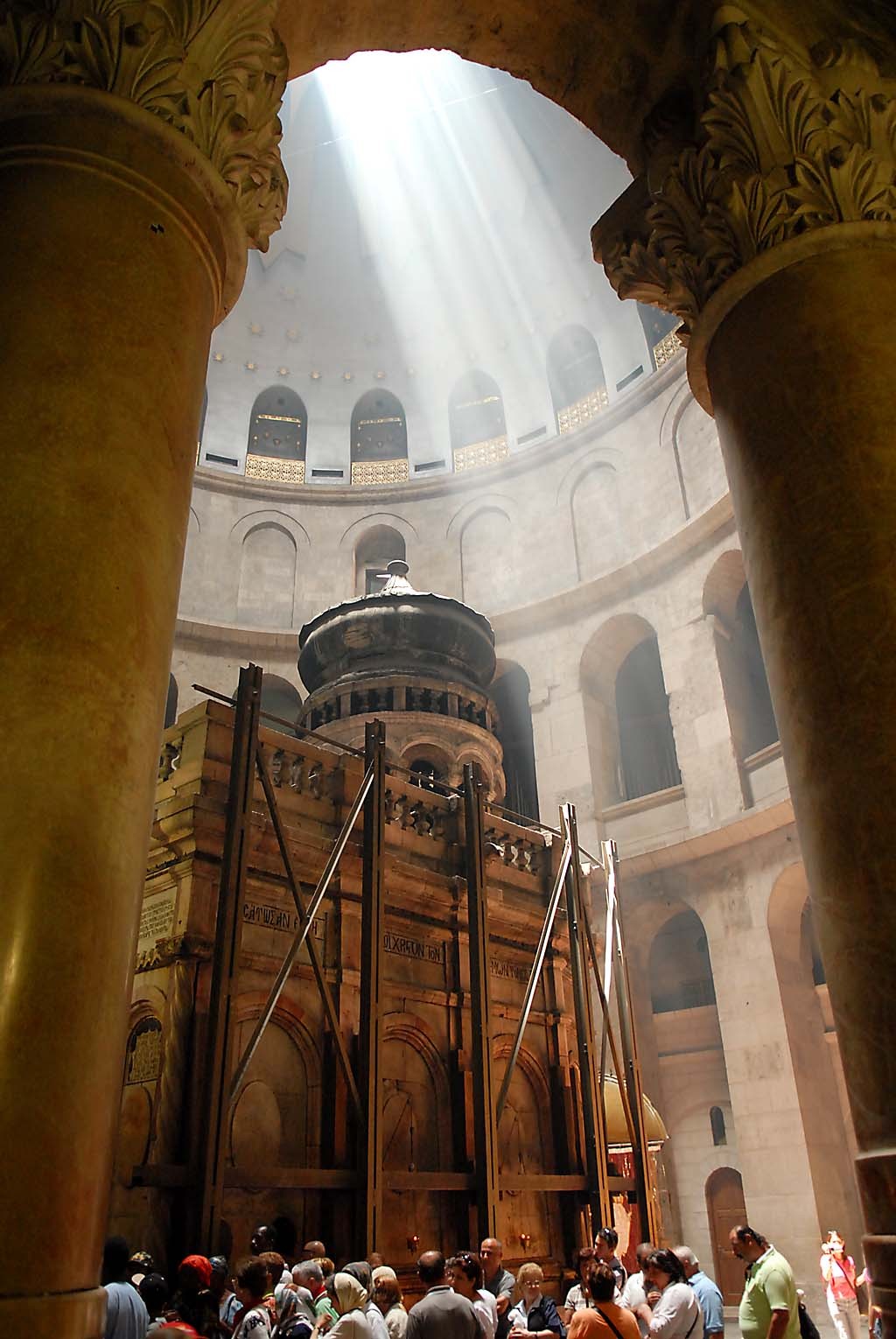
Christos anesti! Alithos anesti!

Christ is Risen! He is Risen Indeed!
(Traditional Greek Easter greeting) Picture of the Holy Sepulchre.

Happy Easter, all. Read more Paschal greetings worldwide.

Sunday, April 24, 2011

Christos anesti! Alithos anesti!

Christ is Risen! He is Risen Indeed!
(Traditional Greek Easter greeting) Picture of the Holy Sepulchre.

Happy Easter, all. Read more Paschal greetings worldwide.

Thursday, April 8, 2010

Quasimodo Sunday

Any party that lasts for 8 days must be a fairly big deal.

The practice of observing an eight day period, or octave, of celebration for major liturgical feasts has its roots in the Feast of Tabernacles in the Old Testament (Leviticus 23:36) and with Constantine I circa 300 A.D with the dedication festivities of the basilicas at Jerusalem and Tyre.

There have been many octaves celebrated in the Catholic Church, but since the 1955 decree by Pope Pius XII the Roman calendar only observes 3: Christmas, Easter, and Pentecost.
[Wikipedia] The term Octave of Easter may refer either to the eight day period (Octave) from Easter Sunday until the Sunday following Easter, inclusive; or it may refer only to that Sunday after Easter, the Octave Day of Easter (sometimes known as Low Sunday). That Sunday is also known historically as St. Thomas Sunday , [Divine Mercy Sunday], and Quasimodo Sunday.


The name Quasimodo came from the Latin text of the traditional Introit for this day, which begins "Quasi modo geniti infantes..." ("As newborn babies...", from the First Epistle of Peter (I_Peter 2:2). [1] Literally, quasi modo means "as if in [this] manner".
(And yes, the Hunchback of Notre Dame takes his name from this day.)


The Global Chant Database lists several other arrangements for the Introit for Quasimodo Sunday.

The full Introit line is translated, "[L]ike newborn infants, long for pure spiritual milk so that through it you may grow into salvation."

Sunday, April 4, 2010

If You Know What I Mean

I make some of the worst jokes sometimes. They're not even funny, but they do amuse me. Most of them are language driven - some things just sound funny, even though they are not themselves funny.

It's not that they are offensive, they're just not funny -- except in my head. I know what I mean.

I went to Wegmans a couple of months ago, and the teenage girl checkout clerk was Turkish (obviously second generation). I mentioned I used to live there once and she asked if I spoke Turkish.

"Badly", was the answer. "I use it as a convenient language my kids don't understand. They think that hadi, gidelim is a girl in the Prosthetics Department." -- and she laughed!

Now, this is only slightly amusing if you're an English speaker listening to Turkish and have an overactive word association imagination. It means "Come on, let's go", but if you say it quickly and listen with an English ear, it sounds like "Heidi, get a limb".

The Greeks also have a saying: Christos Anesti! (Christ is risen!) Alithos Anesti! (He is risen indeed!).

So, in that same spirit I offer you my Easter greeting: "Halitosis is nasty!"

(If you know what I mean.)

Sunday, April 12, 2009

Christos anesti! Alithos anesti!

Christ is Risen! He is Risen Indeed!
(Traditional Greek Easter greeting) Picture of the Holy Sepulchre.

Happy Easter, all. Read more Paschal greetings worldwide.

Thursday, April 9, 2009

Simon Peter The Hothead

Every once in a while I take great comfort in the fact that Simon Peter was such a flawed person.

Peter had a great intensity about him and had flashes of brilliance (grace) in leading his bretheren as the first Pope. But he was also a dumb fisherman who frequently shot off his mouth without first engaging his brain.

On the mountain of the transfiguration, Peter said . . . “Master, it is good that we are here; let us make three tents. . . .” But he did not know what he was saying. Lk 9:33

At the feeding of the four thousand, Jesus "began to teach them that the Son of Man 7 must suffer greatly and be rejected by the elders, the chief priests, and the scribes, and be killed, and rise after three days. He spoke this openly. Then Peter took him aside and began to rebuke him. At this he turned around and, looking at his disciples, rebuked Peter and said, "Get behind me, Satan. You are thinking not as God does, but as human beings do." Mk 8:31-33

This pattern repeats itself right up to the very moment of the Lord's Supper.
He came to Simon Peter, who said to him, "Master, are you going to wash my feet?"

Jesus answered and said to him,"What I am doing, you do not understand now,
but you will understand later."

Peter said to him, "You will never wash my feet."

Jesus answered him, "Unless I wash you, you will have no inheritance with me."

Simon Peter said to him, "Master, then not only my feet, but my hands and head as well."

Jesus said to him, "Whoever has bathed has no need except to have his feet washed,
for he is clean all over." Jn 13:1-15
What a lunkhead.

My favorite depiction of Peter comes from Franco Zeffirelli's miniseries, Jesus of Nazareth, in which Peter laments, "Forgive me, Lord, I'm just a stupid man."

But if Peter can make it by the grace of God, maybe, just maybe, I can too.

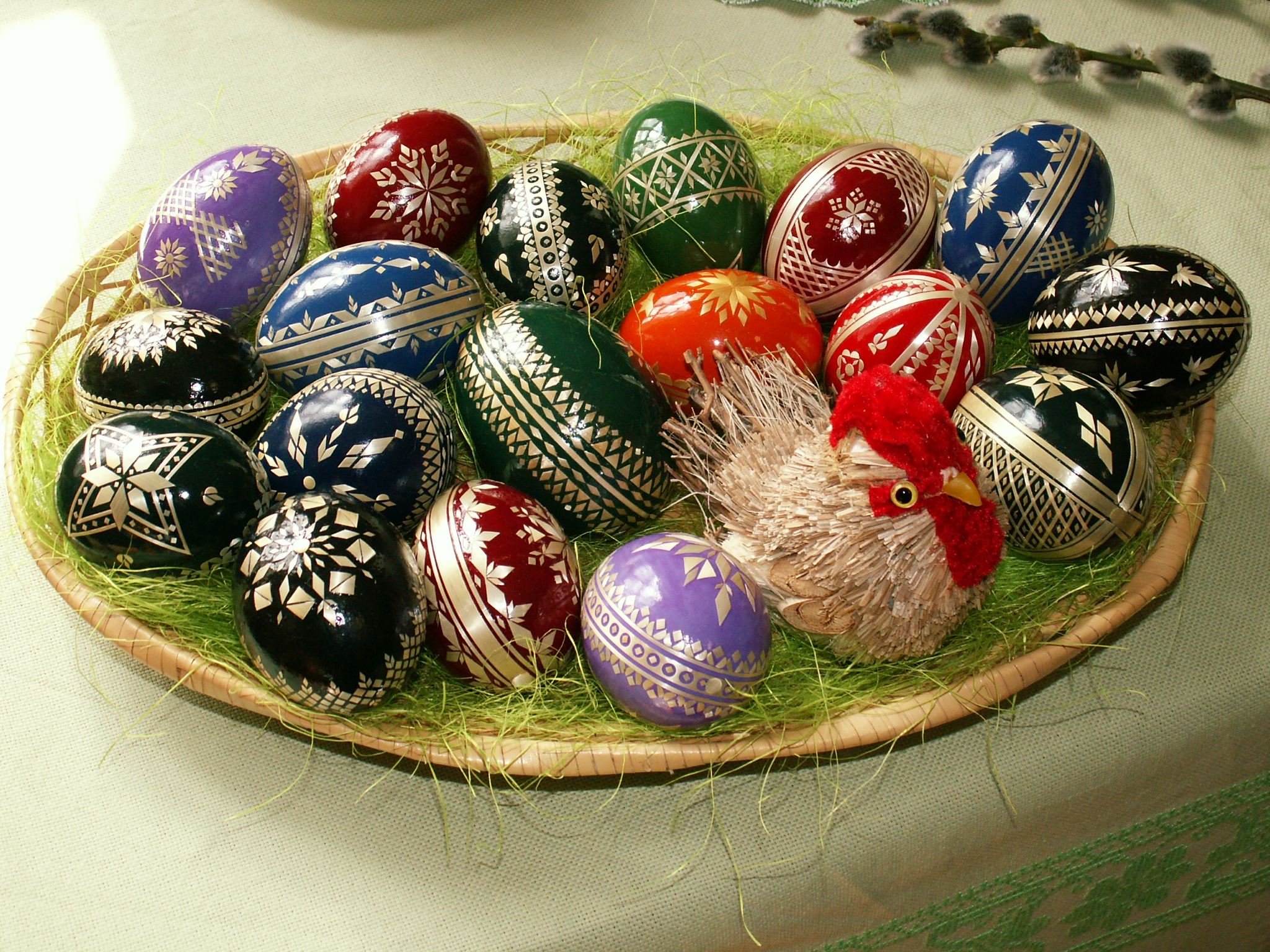
Dazzling Slavic Easter Eggs


Slavic Easter eggs have always been fascinating.

They exhibit a dazzling array of colors, textures, symbols, and high artistry. The egg dying and decorating methods differ from region to region underscoring the variety of traditions and materials available. Common materials include beeswax and plant dyes favored by the batik, or "wax resist", method.

Originating in pre-Christian times, eggs have always been a sign of new life and fertility. Pagan Slavic people painted eggs with protective symbols as amulets to ward against evil spirits and calamities. Various shapes and colors have particular meanings.

Since the advent of Christianity in these regions, the symbolism has been adapted to fit the ancient practice. The most common Easter egg color is red, which symbolizes Christ's blood and resurrection. Like icons, the eggs are written with great attention to detail and prayerful attitude.

Check out this fascinating Reuters video on "members of Germany's Slavic minority, the Sorbs, prepare for Easter by decorating eggs using traditional methods that have been practised for generations."

LinkWithin

Related Posts with Thumbnails